Controlled Burning & Burn Permits in South Georgia
Key Takeaways
- Controlled fire keeps South Georgia’s pine woods healthy — it builds habitat for deer, turkey, and quail while cutting wildfire risk.
- Georgia requires a free Georgia Forestry Commission permit for nearly all open burning outside city limits — land clearing debris, crop residue, and forest management material included.
- Get a standard burn permit online at GeorgiaBurnPermits.com (reachable from GaTrees.org); it’s valid only for the day it’s issued. The old statewide 24-hour phone-permit hotline was retired in 2024.
- A permit doesn’t override a county burn ban — always check both the fire danger rating and the ban status before lighting.
- Lowndes County is not in Georgia’s 54-county summer burn ban, so you can legally burn here in summer — with a permit and safe conditions.
- On Very High fire danger days burning is restricted or prohibited; on Extreme days no permits are issued at all.
- Burn safely: plow a firebreak, keep water on hand, burn in the morning with light, steady winds (generally 10 mph or less), and never leave a fire unattended.
Open burning is part of life in South Georgia. Farmers burn crop residue. Timber companies run prescribed burns through their pine stands. Homeowners burn brush piles, yard debris, and land clearing material. It's been a routine part of managing land in the Coastal Plain for generations — and it remains legal in Georgia, with the right permit and the right conditions.
The problem is that conditions change fast, and what was a legal, safe burn in the morning can turn dangerous by afternoon. Every year in South Georgia, escaped burns cause property damage, road closures from smoke, and — in serious cases — threaten structures and lives. Understanding the permit system, the fire danger rating, and what actually stops a burn from getting away from you is essential for anyone who manages land or burns regularly.
Why Landowners Burn: Habitat and Wildfire Benefits
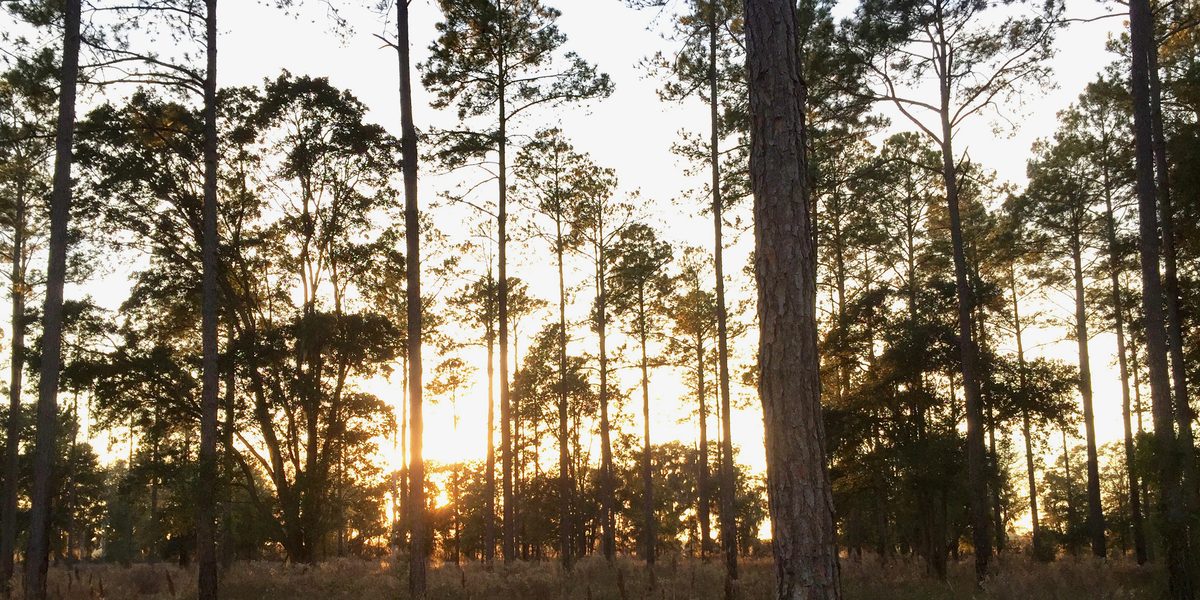
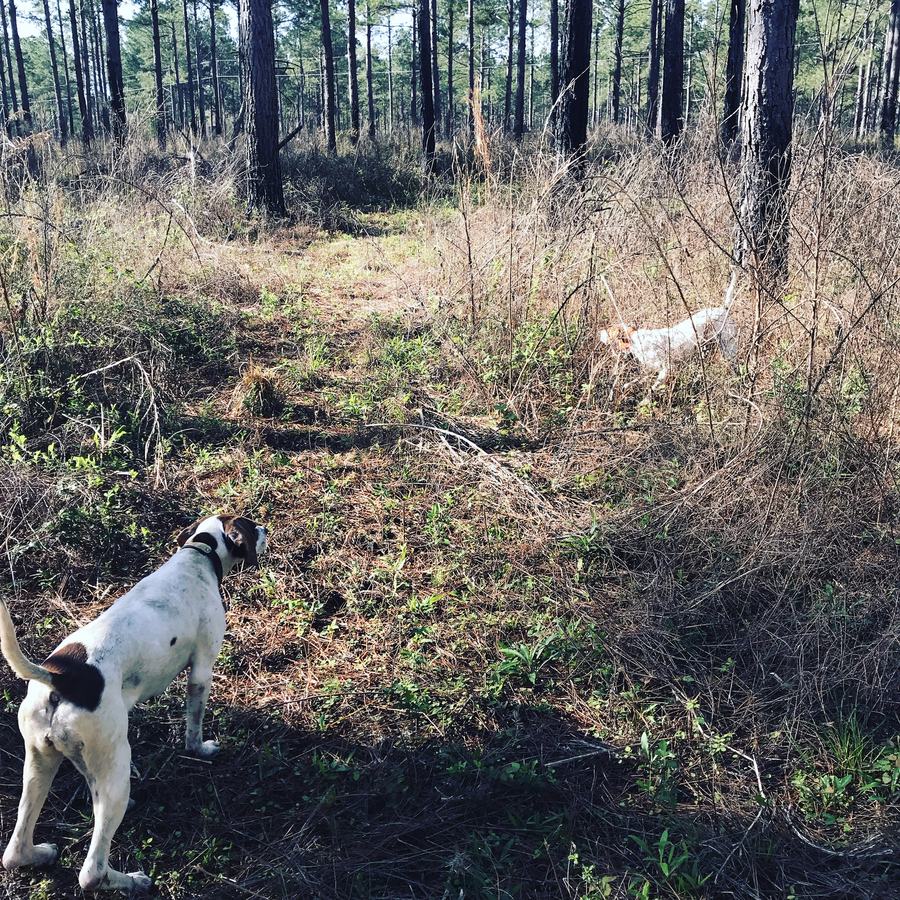
The longleaf and slash-pine country of South Georgia evolved with fire. For thousands of years, lightning and Native Americans kept these woods open and grassy by burning them every few years. Take fire out, and the woods choke — hardwood brush and gallberry crowd in, the ground goes bare and shaded, and the pine stand turns into a fuel-loaded thicket. Put low, controlled fire back on a regular schedule and the opposite happens: the brush gets knocked back, sunlight reaches the ground, and native grasses, legumes, and wildflowers come roaring back. That’s not just pretty — it’s groceries and cover for wildlife.
Strip away the smoke and a prescribed burn does four things at once:
- Cuts wildfire risk. Fire’s fuel is dead needles, leaves, brush, and downed limbs. Burn it off on your terms — a cool day, a plowed firebreak, a crew standing by — and a stray cigarette or a dry-lightning strike in August has far less to feed on. A burned stand is a firebreak for your house and your neighbor’s.
- Builds wildlife habitat. Prescribed fire restores and maintains habitat for bobwhite quail, wild turkey, white-tailed deer, gopher tortoises, and even red-cockaded woodpeckers (Georgia DNR). It releases nutrients, triggers seeds to sprout, and pushes up tender new browse and brood cover.
- Improves the timber. Cleaner stands, less competition, and far lower odds of a catastrophic crown fire.
- Boosts plant diversity. More grasses and flowering plants means more insects, which means more turkey poults and quail chicks getting fed. It all connects.
If you hunt, this is the part that should make you sit up. A two- or three-year-old burn is a deer-and-turkey magnet — the green-up after a fire is some of the most attractive browse on the property, and the open, grassy understory is exactly what turkey hens want for nesting and what quail need to survive. Frequent fire — every one to two years — is what keeps quail numbers healthy (Georgia DNR).
This isn’t fringe practice, either. Georgians prescribe-burn roughly 1.4 million acres a year, among the most of any state in the country (Georgia Forestry Commission). And we live right next door to the place that wrote the book on it: Tall Timbers Research Station, in the Red Hills region south of Thomasville, is widely called the birthplace of modern prescribed-fire science (Tall Timbers). The people burning their pines around here are standing on about a century of research done in our own backyard.
Do You Need a Burn Permit in Georgia?
Yes — with few exceptions. Georgia law requires a permit for any open burning outside the incorporated limits of a city or town, with a handful of narrow exceptions (campfires for warmth or cooking, small fires for recreation). Any burning of land clearing debris, crop residue, agricultural material, or forest management material requires a Georgia Forestry Commission burn permit.
The permit is free and is issued by the Georgia Forestry Commission (GFC). It authorizes you to burn on a specific date, subject to conditions — primarily fire danger rating and weather. A permit does not guarantee you can burn on your chosen day; it authorizes you to burn if conditions allow.
One recent wrinkle worth knowing: Georgia no longer requires a permit for simple hand-piled yard debris (leaves and limbs only) — but agricultural, land-clearing, and broadcast burns still do (Georgia Forestry Commission). Conditions still have to be safe either way, and local rules can differ. When in doubt, call — it costs nothing, and it’s the difference between a legal burn and a liability.
How to Get a Georgia Burn Permit
Burn permits are issued through the Georgia Forestry Commission. There are several ways to obtain one:
- Online: Since April 8, 2024, standard broadcast burn permits are issued through the GFC's online system at GeorgiaBurnPermits.com (reachable from GaTrees.org). Enter your county and location information to request a permit. This is the fastest method — and, for standard burns, now the primary one.
- By phone: The statewide 24-hour automated phone-permit hotline was retired in April 2024, so you can no longer get a standard permit by phone around the clock. 1-800-GA-TREES (1-800-428-7337) is still a staffed line during business hours for agriculture, silviculture, land-clearing, storm-debris, and Air Curtain Destructor notification and permits — it is not an automated 24/7 system.
- Local GFC office: Your local Forestry Commission county office can also help by phone during business hours — useful if you don’t have internet access. In Lowndes County, the local office can be reached through the statewide number.
You'll need to provide your county, the general location of the burn (GPS coordinates or a description), the type of material being burned, and an estimated acreage. The permit is valid for the day it's issued only — you need a new permit each day you plan to burn.
Fire Danger Ratings: What They Mean for Your Burn
The Georgia Forestry Commission issues daily fire danger ratings for each county. These ratings range from Low to Extreme, and they directly affect what burning is allowed:
- Low / Moderate: Burning is generally permitted with a valid permit. Fires are manageable and unlikely to spread aggressively under normal conditions.
- High: Burning is permitted but requires greater caution. Fire behavior is more active, spread potential is higher, and conditions can change quickly. The GFC may impose additional restrictions.
- Very High: Burning is restricted or prohibited. The GFC may not issue permits on Very High fire danger days, or may restrict burning to specific hours (often before 10 a.m. or after 6 p.m.).
- Extreme: Burning is prohibited. No permits are issued, and any active burns should be extinguished. Extreme ratings in South Georgia typically accompany drought conditions and strong winds — the exact combination that produces escaped wildfires.
The Burn Permit Checker shows the current fire danger rating for your county alongside any active county burn bans, so you can check your specific situation before calling or going online for a permit.
County Burn Bans: Separate from Fire Danger
Fire danger ratings are issued by the GFC based on weather and fuel moisture data — our guide to South Georgia weather and fire warnings covers how those conditions develop. County burn bans are separate — they can be declared by county governments, emergency management agencies, or through the GFC's FireResponse system in response to specific conditions. A county can have a burn ban in effect even if the statewide fire danger rating is only Moderate, if local conditions warrant it.
In South Georgia, burn bans are most common during extended dry periods in late winter and spring — typically February through April — when fuel loads from the previous growing season are dry and green-up hasn't yet started. Drought conditions in the summer and fall can also trigger bans. Some cities and counties also layer on their own ordinances or notification requirements, which is one more reason to check conditions before you commit.
One ban that does not apply here: Georgia’s summer open-burning ban. From May 1 to September 30 the state prohibits most open burning to cut down on ozone — but only in 54 mostly-metro and North Georgia counties (Georgia EPD). Lowndes County and our South Georgia neighbors are not on that list, so unlike folks around Atlanta, we can still burn in summer with a permit and the right conditions. That doesn’t mean you should on a bone-dry, windy August afternoon — but the option is legally there.
The Burn Permit Checker monitors the GFC's FireResponse system for active county bans and displays them alongside fire danger ratings, so you get both in one place.
When (and How Often) Landowners Burn
Most habitat burning down here happens in the dormant season — roughly December through early March — when the hardwoods are leafed off, the weather is cool, and the fire behaves. It’s the safest, most forgiving window, and it’s when you’ll see most of the smoke around the county.
Growing-season burns (late spring into summer) are a real tool too. They do a better job knocking back tough hardwood brush and can bump up groundcover diversity (Georgia Outdoor News). But they’re trickier — drier fuels, more heat, touchier smoke — so they’re best left to experienced hands or a hired crew.
As for how often: a one- to three-year rotation is the sweet spot for most South Georgia pine ground, leaning toward the shorter end if you’re managing hard for quail. Burn the whole place at once and you leave wildlife nowhere to go; burn it in blocks on a rotation and there’s always fresh green-up sitting right next to standing cover.
Safe Burning Practices
A permit and a Low fire danger rating don't make a burn automatically safe. Escaped burns happen even under good conditions when basic precautions aren't taken. The Georgia Forestry Commission boils safe burning down to S‑S‑T‑A‑R — Space, Time, Attendance, Reasonable precautions — and it’s worth memorizing:
- Space: Keep at least 25 feet between your fire and the woods, and 50 feet from any structure.
- Time: Start after 8:00 a.m. and have the fire dead out before dark — most escapes happen at night when you can’t see what the fire is doing. Morning burns, after the dew has dried but before the afternoon heat builds, offer the best combination of manageable fire behavior and reasonable smoke dispersion; avoid lighting in the mid-to-late afternoon when temperatures peak and relative humidity drops.
- Attendance: Never leave a burn unattended. Someone watches the fire the entire time, and Georgia law requires that you remain on-site until the fire is completely extinguished.
- Reasonable precautions: Plow or disc a firebreak around your burn area before you light — a 10- to 15-foot mineral soil break around the perimeter is the minimum, and on windy days wider is better. Have a water source available — a tank on a truck, a tractor with a water tank, or at minimum backpack sprayers — before you light anything, plus a real plan for when the wind shifts. Waiting until a fire gets away from you to look for water is too late.
And watch the wind. The GFC says to burn only with light, steady winds — generally 10 mph or less — and never when winds are gusty or expected to pick up. A little wind helps smoke disperse; dead-calm days let smoke lie down on roads and neighbors.
Smoke and Neighbors
Even a legal burn with a valid permit can create problems if smoke impacts roads or neighbors significantly. In South Georgia, smoke from burns along highways — US 41, US 84, I-75 — is a well-known hazard and has contributed to serious accidents over the years. If your burn is near a public road, pay attention to wind direction and smoke behavior, and plan your timing so you're never blinding drivers. A burn that produces heavy smoke drifting across a highway can result in liability even with a valid permit if accidents occur. It's also worth telling your neighbors and the local fire department before you light, so nobody panics when they see smoke.
Georgia law also prohibits burning materials that produce dense black smoke — tires, treated lumber, plastics, household garbage. These are illegal to burn regardless of permit status or fire danger rating.
Prescribed Fire vs. Debris Burns
Much of the burning in South Georgia's timber country is prescribed fire — intentional, planned burns designed to manage pine understory, reduce fuel loads, and maintain the wildlife habitat described above. It's also significantly more complex than a homeowner brush pile burn.
If you're managing timberland and planning a prescribed burn larger than a few acres — or tackling a trickier growing-season burn — consider working with a consulting forester, a certified prescribed-burn crew, or the GFC's Prescribed Burn Manager program. The GFC offers assistance to landowners conducting prescribed burns, including technical guidance and sometimes direct assistance on burns that meet program criteria. Hiring experienced help is a lot cheaper than the alternative.
Common Questions
Do I need a permit to burn my land in South Georgia?
For a broadcast burn of woods or fields, yes — a free permit from the Georgia Forestry Commission, gotten the day of the burn online at GeorgiaBurnPermits.com (reachable from GaTrees.org). Simple hand-piled yard debris (leaves and limbs) no longer requires one, but the conditions still have to be safe.
Can I legally burn in the summer here?
Yes. Georgia’s May 1–September 30 summer burn ban only covers 54 mostly-metro and North Georgia counties, and Lowndes and our neighbors aren’t on the list. You still need a permit and safe conditions — and you should skip any dry, windy, high-fire-danger day.
When is the best time to do a habitat burn?
Most are done in the dormant season, December through early March, when it’s cool and the fire is easy to handle. Growing-season burns work too but are best left to experienced burners.
How often should I burn?
A one- to three-year rotation suits most South Georgia pine ground — every year or two if you’re managing hard for quail. Burn in blocks, not all at once, so wildlife always has cover nearby.
It’s a Red Flag day — can I still burn?
No. A Red Flag Warning means low humidity, high wind, and dry fuels — exactly the recipe for an escaped fire. Check Fire Watcher first and wait it out.
Check Before You Burn
The single most important habit to build is checking conditions before every burn, every time — not just once at the start of the season. Use burn.riktom.com to check your county's current fire danger rating and any active burn bans with a single search, then cross-check Fire Watcher, which tracks wildfire activity, drought, and Red Flag conditions for the region — a Red Flag Warning (low humidity, high wind, dry fuels) is a hard no on burning, full stop. It takes 30 seconds and can save you a significant amount of legal and financial trouble — or worse. If both look green and the official fire danger rating is low, get your free permit and go; if anything's flashing, wait for a better day. The woods will still be there. And because escaped burns are a leading way wildfires start here, our wildfire preparedness guide for South Georgia homeowners is worth a read too.