Stargazing in South Georgia: Best Dark Sky Spots and When to Go
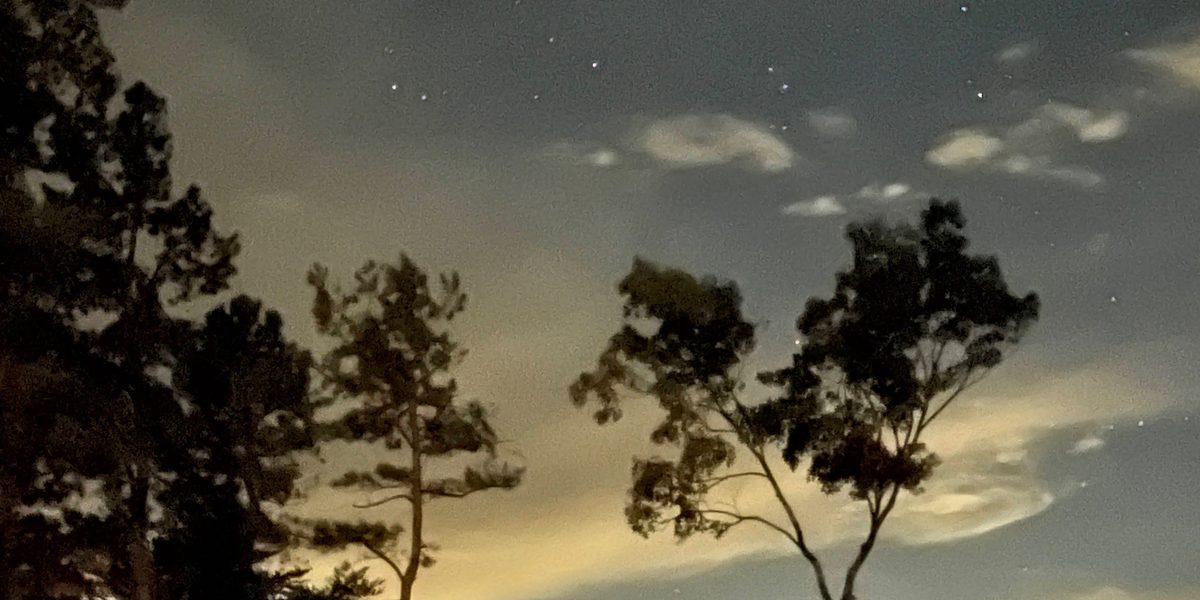
Key Takeaways
- South Georgia’s flat, sparsely populated Coastal Plain is one of the few dark-sky pockets left in the eastern US, with Bortle 3–4 skies in the far southern counties.
- Stephen C. Foster State Park in the Okefenokee is the single best stargazing spot in South Georgia; rural Echols County roads and General Coffee State Park are good alternatives.
- Winter brings the clearest air and brightest constellations; summer puts the Milky Way’s bright galactic core in the southern sky, with the band arcing overhead.
- Plan around the new moon, give your eyes 20 minutes to dark-adapt, and bring a red flashlight and binoculars — no telescope needed.
Most people who live in South Georgia have never thought of it as a stargazing destination. But step away from the lights of Valdosta, Tifton, or Waycross on a clear moonless night, and you'll find skies that people drive hours from Atlanta to see. The Coastal Plain's flat, open landscape means unobstructed horizons in every direction. Sparse population density means far less light pollution than nearly anywhere else in the eastern United States east of the Mississippi. On the right night, in the right spot, you can see the Milky Way's bright galactic core low in the southern sky, with the glowing band arcing overhead — something most Americans born in the last 40 years have never experienced.
This guide covers where to go, what to expect to see across the seasons, and how to plan a night under South Georgia skies.
Why South Georgia Has Good Dark Sky
Light pollution maps of the eastern United States show a nearly unbroken wall of orange and yellow from Boston to Miami. South Georgia is one of the few breaks in that wall. The Okefenokee Swamp, the surrounding timber lands, and the low population of Echols, Clinch, Ware, Charlton, and neighboring counties create a pocket of genuinely dark sky that's accessible by car within a few hours of several major southeastern cities.
The Bortle scale — a 1-to-9 measure of night sky darkness, where 1 is the darkest sky on Earth and 9 is an inner-city sky — rates most of the far south Georgia counties around 3 to 4. That's genuinely dark. You'll see the Milky Way without optical aid. You'll notice the sky is actually dark between stars, not washed grey. And your eyes will adapt to see faint objects you didn't know were there.
Compare that to Atlanta (Bortle 8-9) or even the suburbs of Valdosta (Bortle 5-6), and the difference is dramatic. The Okefenokee area in Charlton County is among the darkest accessible locations in Georgia.
Best Locations for Stargazing
Stephen C. Foster State Park — Fargo, Georgia
Stephen C. Foster State Park sits inside the Okefenokee National Wildlife Refuge in Charlton County, roughly 18 miles northeast of Fargo on Highway 177. It is the single best stargazing location in South Georgia and one of the best in the state. The park is surrounded by the swamp on three sides, with no significant light sources within many miles. The park itself goes dark at night — staff are aware of the astronomy community and take light management seriously.
The park has a campground with electrical and primitive sites, so you can set up for an overnight. Bring a blanket or camp chair and lie flat — looking straight up through the clear south Georgia air on a winter night from Foster State Park is as good as stargazing gets east of the Mississippi. The park also offers dark sky events periodically; check the Georgia State Parks website for scheduled programs.
Note: the park closes its entrance gate at night. If you're arriving for late-evening stargazing, coordinate with the park in advance or plan to be on-site before closing.
Okefenokee Adventures — Folkston, Georgia
On the eastern side of the Okefenokee near Folkston in Charlton County, this outfitter provides access to the swamp's eastern trail system and sits in similarly dark sky. This is a day-use entrance — overnight stays on the east side of the swamp are by wilderness-platform permit or guided excursion only. The Folkston area has a small-town center with some light spill, but driving about 8 miles south of town on GA 121/23 and turning onto the refuge entrance road puts you in very dark conditions. The eastern entrance to the Okefenokee National Wildlife Refuge at Suwannee Canal Recreation Area is another option in this area.
Rural Echols County Roads
Echols County is one of the least populated counties in Georgia. The area around Statenville — the county seat — and the network of county roads through the timber lands offer extremely dark skies with essentially no facilities. Pull off on a paved road shoulder in the middle of Echols County on a clear, moonless night and you're in one of the darkest locations in the state. Bring everything you need; there are no conveniences nearby.
General Coffee State Park — Nicholls, Georgia
General Coffee State Park in Coffee County is farther north than the Okefenokee locations and sits in somewhat less dark sky, but it's more easily accessible from Valdosta and has a well-developed campground. On nights with no moon and good atmospheric transparency, the Milky Way is visible from the park. It's a good option for families with children who want an introduction to dark sky viewing without a long drive.
What to Look for Through the Seasons
South Georgia's mild climate means comfortable outdoor conditions for most of the year, though summer humidity can affect sky transparency. Here's what the night sky offers season by season:
Winter (December–February)
Winter is arguably the best season for South Georgia stargazing. Humidity is lower, the air is clearer, and the sky features some of the brightest constellations visible from Earth: Orion, Taurus, Gemini, Canis Major (home to Sirius, the brightest star in the sky). The Orion Nebula — a stellar nursery visible as a fuzzy patch below Orion's belt — is the most impressive naked-eye deep-sky object in the winter sky. Binoculars reveal it as a glowing cloud of gas surrounding the bright Trapezium star cluster.
Spring (March–May)
Spring brings the Leo constellation high overhead, and with it the Leo Triplet — three galaxies (M65, M66, and NGC 3628) visible through binoculars or a small telescope under dark skies. The Virgo Cluster, the largest nearby galaxy cluster, is well-placed in spring. On good nights with a small telescope, you can see dozens of galaxies in a single field of view. Spring weather in South Georgia can be variable — clear nights alternate with humid, hazy periods.
Summer (June–August)
The Milky Way's galactic core — the dense, cloud-like heart of our galaxy — rises in the southeast and climbs only about a third of the way up the southern sky, while the glowing band of the Milky Way arcs overhead through summer nights. From a dark South Georgia location, it's stunning and unmistakable. The summer triangle (Vega, Deneb, Altair) dominates the summer sky. Summer nights are warm and buggy — bug repellent and a light chair are essential, and our guide to staying bug-bite free in the South Georgia outdoors covers what actually works. Humidity can wash out the fainter stars, so choose nights after a cold front passage when the air has dried out.
Fall (September–November)
Fall offers excellent transparency as humidity drops. The Andromeda Galaxy — the most distant object visible to the naked eye, 2.5 million light years away — is high overhead in fall. The Great Square of Pegasus makes finding it straightforward. The Perseus Double Cluster, two open star clusters visible together in binoculars, is a fall favorite. Meteor activity picks up in fall, with the Orionids (mid-October) and Leonids (mid-November) producing reliable annual showers.
Meteor Showers Worth Watching
Meteor showers happen when Earth passes through the debris trail left by a comet. The following reliable annual showers are well-placed for South Georgia viewing:
- Perseids (August 11–13 peak): The most famous annual shower. The radiant (the point from which meteors appear to originate) rises in the northeast after midnight. Up to 100 meteors per hour at peak under ideal conditions. Warm nights make it comfortable.
- Orionids (October 20–21 peak): Associated with Halley's Comet. The radiant rises after midnight in Orion. Typically 20–30 meteors per hour at peak.
- Leonids (November 17–18 peak): Variable from year to year, but usually reliable for 10–20 meteors per hour. Occasionally spectacular during storm years.
- Geminids (December 13–14 peak): The best winter shower. Unlike most showers, the Geminids begin in the evening hours, so you don't have to wait until midnight. Up to 120 meteors per hour at peak. Cold December nights in South Georgia — dress in layers.
Check Georgia Night Sky Guide for tonight's specific sky conditions at your location, including moon phase, atmospheric transparency, and whether any meteor showers are active.
Getting Started: What You Need
Stargazing requires less equipment than most people think. For a first dark sky night in South Georgia, you need:
- Your eyes: Give yourself at least 20 minutes for your eyes to dark-adapt before you judge the sky. Avoid looking at phone screens or white flashlights during this time.
- A red flashlight: Red light doesn't destroy your night vision the way white light does. A red-filtered headlamp or a flashlight covered with a red balloon is the standard. Most astronomy apps on smartphones have a red night mode.
- A reclining chair or blanket: Lying flat and looking up is far more comfortable than craning your neck. A camp chair that reclines works well.
- Binoculars: A 7x50 or 10x50 binocular reveals dramatically more than the naked eye — craters on the moon, star clusters, the moons of Jupiter, the Andromeda Galaxy as an extended object. You don't need a telescope to have a rewarding experience.
- A sky chart or app: A planisphere (a rotating star wheel) is the classic tool. Smartphone apps like SkySafari or Stellarium can identify objects when you point your phone at the sky, though use them in red mode to preserve your night vision.
Night Fishing Under Dark Skies
South Georgia's rivers and lakes don't empty out at dark — in fact, some of the best fishing of a hot summer day happens after sunset. Fishing at night on the Withlacoochee or Alapaha under a moonless sky in the middle of Echols County is about as quiet and remote as it gets in the Southeast. Catfish move actively in the dark. Bass hit surface lures on warm summer nights. And the sky overhead, if you take a minute to look up from the rod, is remarkable. If you need a place to start, see our guide to the best fishing spots in South Georgia.
If you're combining a night fishing trip with stargazing, plan your sky viewing for the first hour or two of full darkness, then shift your attention to the water. Your eyes will already be adjusted, and you'll be able to see your surroundings far better than you'd expect.